
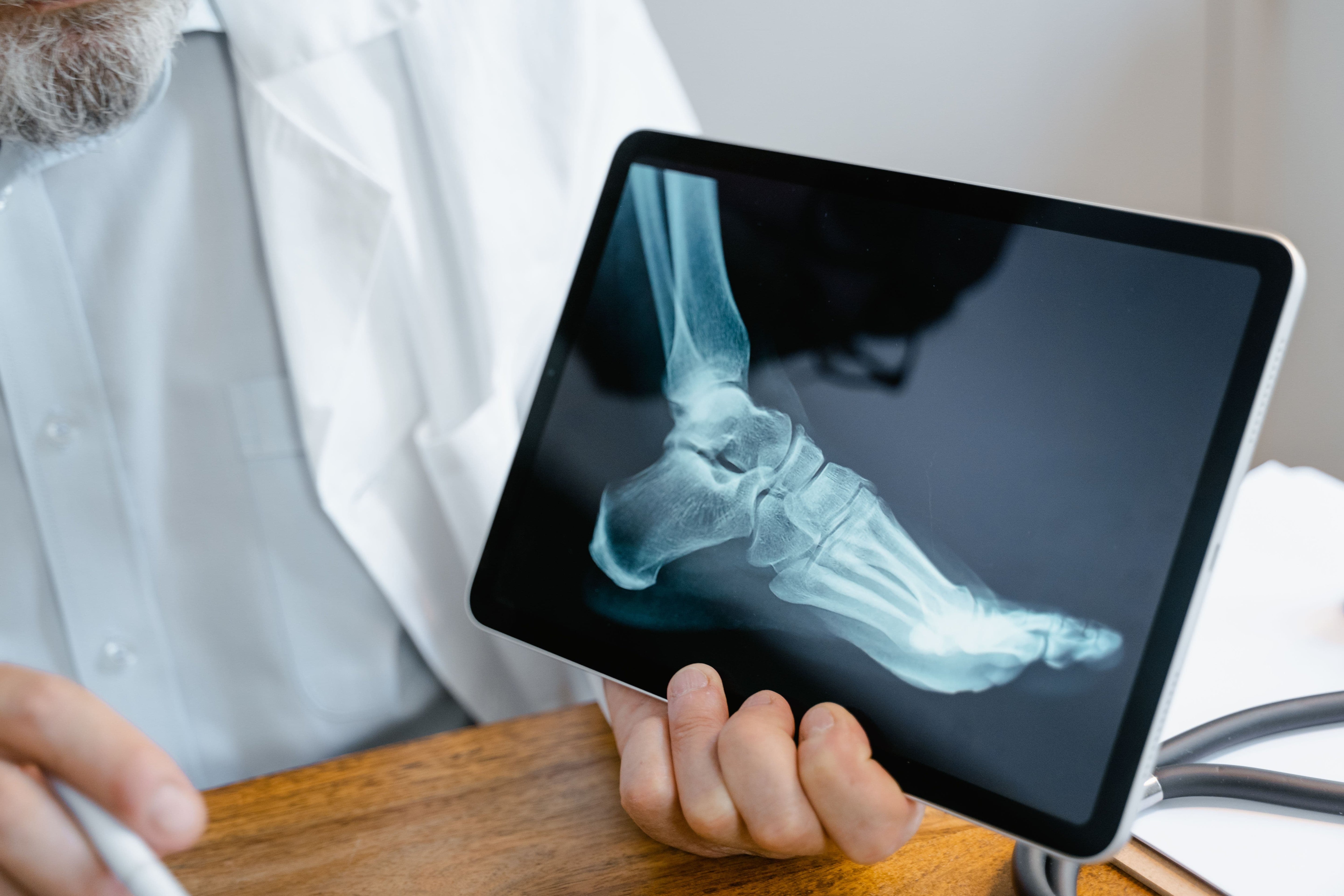
What Is Bone Remodeling, and Why Does It Matter After 50?
Most of us think of bones as permanent structures, unchanging for most of our adulthood, then inevitably declining and growing weaker as you age. But, in reality, our skeleton is extremely active and constantly undergoes a process called “bone remodeling.” Bone remodeling is the constant process of building up and breaking down bone, where mature or damaged bone is resorbed and new bone is deposited.
Is Your Skeleton Really as Stable as It Seems?
One quote I like to think of is a description of this process offered more than fifty years ago, in 1955, by physician A.M. Cooke. He observed “The stability and immutability of dry bones and their persistence over the centuries, and even millions of years after the soft tissues have turned to dust, gives us a false idea of bone during life. Its fixity after death is in sharp contrast to its ceaseless activity during life.”
This “ceaseless activity during life” is what is called today as bone remodeling, suggesting that our bones are far from inert, but rather living tissue that can be actively improved.
What Does Bone Remodeling Actually Do for You?
More recently, researchers Dimitrios Hadjidakis and Ioannis Androulakis explain, “The skeleton is a metabolically active organ that undergoes continuous remodeling throughout life.” And, additionally, bone remodeling serves several essential functions. They explain that bone remodeling helps repair microdamages in the bone matrix, preventing everyday wear and tear from accumulating, and it allows the skeleton to adapt to changing mechanical demands throughout life. Perhaps most importantly, it helps maintain the body's calcium balance.
Why Is Your Skeleton Also a Calcium Reserve?
Your skeleton stores approximately 99% of the calcium in your body. While we often think of bones as structures that need calcium, they're also a reservoir of calcium. For our hearts to beat or our nerves to appropriately signal, we need to depend on calcium being available in the bloodstream. When dietary intake falls short, the body can draw from its skeletal reserves to keep these critical functions running normally. This is why scientists call our skeleton a “functional reserve” of these critical nutrients.
What Happens to Bone Remodeling Around Age 50?
For most of our adult lives, bone remodeling remains relatively balanced. We reach peak bone density around 30 and, for the rest of our early and mid-adulthood, old bone is removed and replaced at roughly the same rate. But, for women, menopause changes that balance. A decline in estrogen shifts the process toward greater bone breakdown than bone formation.
As the UCL review puts it simply: “Ageing, the menopause and many other pathophysiological states can alter the balance of the turnover process, such that resorption begins to outstrip formation, leading to net bone loss and ultimately osteoporosis.”
For women, the menopausal transition signals an acceleration in bone loss, with many women losing up to 20% of their bone mineral density in the 5-7 years following menopause.
Why Do Your Calcium Needs Increase After 50?
Understanding this momentous shift in bone remodeling helps us understand why calcium intake becomes increasingly important as you age, especially for women. In fact, the RDA for calcium for women increases from 1000mg to 1200mg at age 51, but for men the RDA only increases to 1200mg at age 71. For women in midlife, if the body is already losing bone more quickly than it rebuilds it, consistently falling short on calcium creates yet another demand on the skeleton's reserves.
Is It Too Late to Improve Your Bone Health?
Understanding bone remodeling in detail can change how we think about bone health. Knowing that our skeletons aren't a static structure we're trying to preserve is actually helpful because knowing that means we can improve our skeleton over time. The “ceaseless activity” of bone remodeling shows we can strengthen our skeleton since it is a living system, constantly renewing itself.
That's the idea behind Seen's Calcium Chew + K2: steady calcium your body can actually use, to support that ongoing process.
Read more
Summary: Calcium chloride is a food additive, a calcium salt introduced during processing to firm vegetables, set tofu, and balance electrolytes in water and beverages. It is FDA-recognized as gene...
Many of us know now how important vitamin K2 is for bone health. Yet, unless you're in the bone health world, we aren't as aware of where vitamin K2 is naturally found in diet. Here at Seen we have...