
What Foods Are High in Vitamin K2?
Many of us know now how important vitamin K2 is for bone health. Yet, unless you're in the bone health world, we aren't as aware of where vitamin K2 is naturally found in diet. Here at Seen we have a "food-first approach to bone health," meaning that we turn to our diets first to see where bone-healthy nutrients are commonly found. For calcium, that answer is usually dairy. But for vitamin K2, most people aren't as aware of natural dietary sources since vitamin K2 is relatively uncommon in the modern diet.
Zooming out first, vitamin K exists as a family of compounds. Vitamin K1 (phylloquinone) is found primarily in green leafy vegetables, while vitamin K2 (menaquinones) is found in much smaller amounts in certain animal foods and fermented foods. The best-studied forms of vitamin K2 are MK-4 and MK-7. The NIH fact sheet on vitamin K is a particularly helpful overview of the types of vitamin K.
Why Does Vitamin K2 Matter for Bone Health?
Vitamin K2 doesn't build bone by itself. Instead, it helps activate proteins involved in bone metabolism. One of those proteins is osteocalcin, which plays an important role in bone mineralization. Another is matrix Gla protein (MGP), which is found in bone, cartilage, and blood vessels and continues to be an active area of scientific research.
This is why calcium and vitamin K2 are often discussed together. Calcium provides the mineral your bones need, while vitamin K helps activate proteins that participate in how bone is built and maintained.
Foods High in Vitamin K2
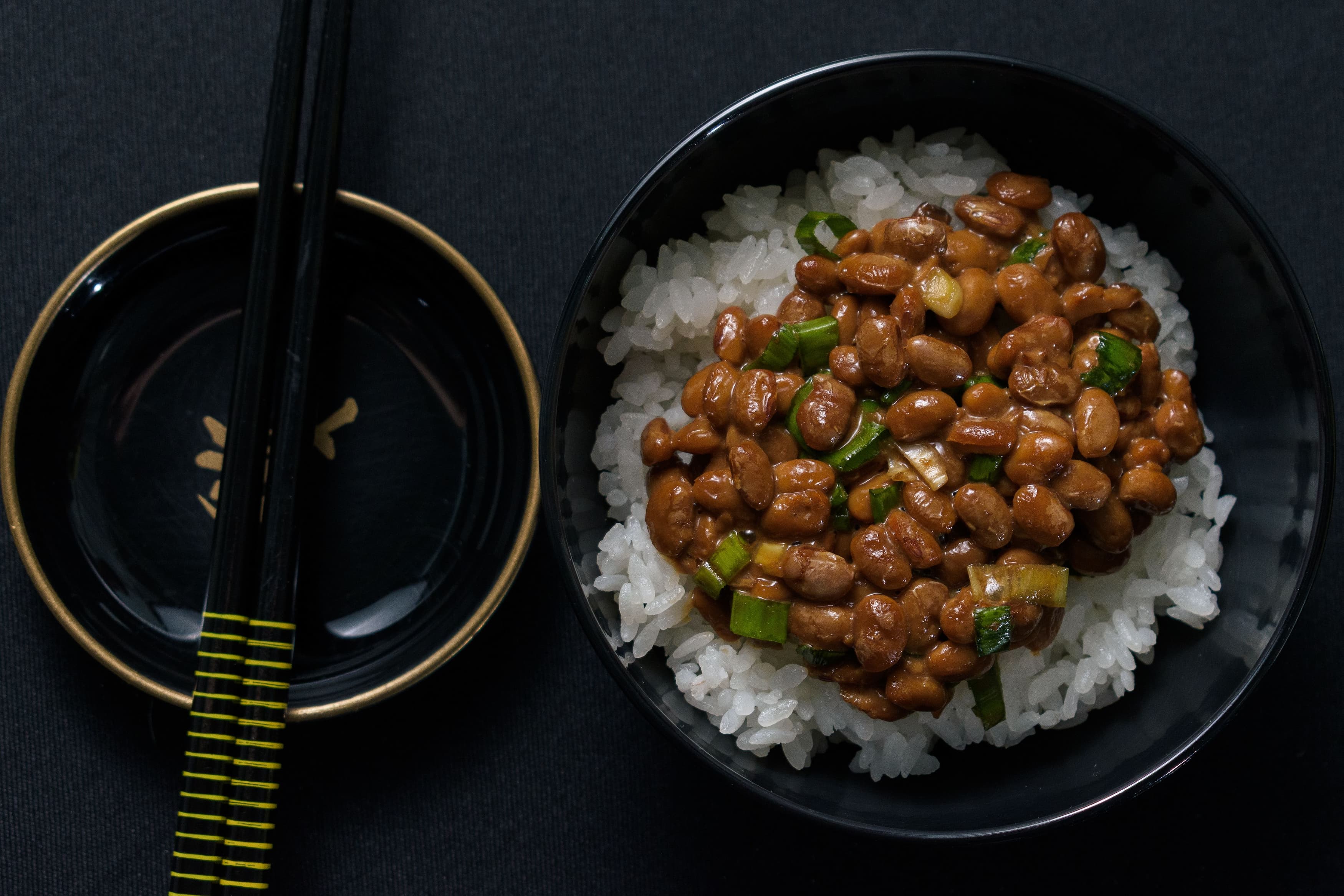
Natto
Natto is by far the highest source of dietary K2, but it's an uncommon food. Made from fermented soybeans, natto contains extraordinarily high levels of MK-7. In fact, the NIH lists a 3-ounce serving as providing 850 micrograms of vitamin K, far more than any other commonly eaten food. But very few Americans eat natto regularly. Its sticky texture and strong flavor make it something of an acquired taste.
Cheese
Certain aged cheeses contain vitamin K2 because it's produced during bacterial fermentation. The exact amount varies depending on the cultures used and the fermentation process, but cheeses like Gouda and Jarlsberg tend to be among the better dietary sources. Our scientific advisor, Dr. Jocelyn Wittstein, is a big fan of Jarlsberg cheese not only for the vitamin K2 content, but also for the taste.
Liver and Meat
Chicken liver, beef, pork, and poultry contain MK-4, although the amounts are relatively small. Interestingly, the NIH notes that livestock produce MK-4 from vitamin K added to animal feed, which is why meat and poultry can contribute some vitamin K2 to the diet.
Fermented Dairy
Fermented dairy products like kefir and some yogurts may also provide vitamin K2, although the amount depends on the bacterial strains used during fermentation.
Vitamin K1 vs. Vitamin K2 in Your Diet
Most Americans get more vitamin K1 because it's abundant in spinach, kale, broccoli, and other leafy greens, but vitamin K2 is different. For example, a cup of raw spinach contains 145 mcg of K1 per serving, while a ½ cup of boiled turnip greens contains an impressive 426 mcg of vitamin K1 per serving.
But, other than natto, there are very few foods that provide substantial amounts of vitamin K2, and many of them (liver, fermented soybeans, aged cheeses) simply aren't everyday staples for most people. That's one reason vitamin K2 has become increasingly popular in bone health supplements and why we chose to include vitamin K2 from fermented chickpeas in our chew.
Why We Created a Calcium Chew With Vitamin K2
At Seen, we think of bone health from our food-first philosophy, as I mentioned earlier, recognizing that the “food matrix effect” contributes to the overall healthfulness of your diet, not isolated nutrients acting independently.
We know that calcium provides the mineral that makes up much of your skeleton. Vitamin D helps your body absorb that calcium. Vitamin K contributes by activating proteins involved in bone metabolism. Each of these nutrients has different roles to play in bone metabolism, but each contributes toward the shared effect of bone health.
For our Calcium + K2 chew, we chose MK-7 derived from fermented chickpeas, a form of vitamin K2 that aligns with our food-first philosophy and complements the calcium women are already trying to consume through their diet and with our chew.
If you're looking for foods high in vitamin K2, the list is surprisingly short. Natto is by far the richest source, followed by certain fermented cheeses, egg yolks, liver, and other fermented foods. While these foods can certainly contribute to a healthy diet, many women don't eat them consistently enough to rely on them as their primary source of vitamin K2.
That's why we think about vitamin K2 the same way we think about calcium. Start with food whenever possible. Then, if your everyday diet leaves a gap, look for a consistent way to fill it.
Read more
Most of us think of bones as permanent structures, unchanging for most of our adulthood, then inevitably declining and growing weaker as you age. But, in reality, our skeleton is extremely active a...
We all have seen just how quickly GLP-1 medications (such as Ozempic and Wegovy) have been adopted in treating obesity and type 2 diabetes. Almost everyone knows someone taking these drugs, and the...